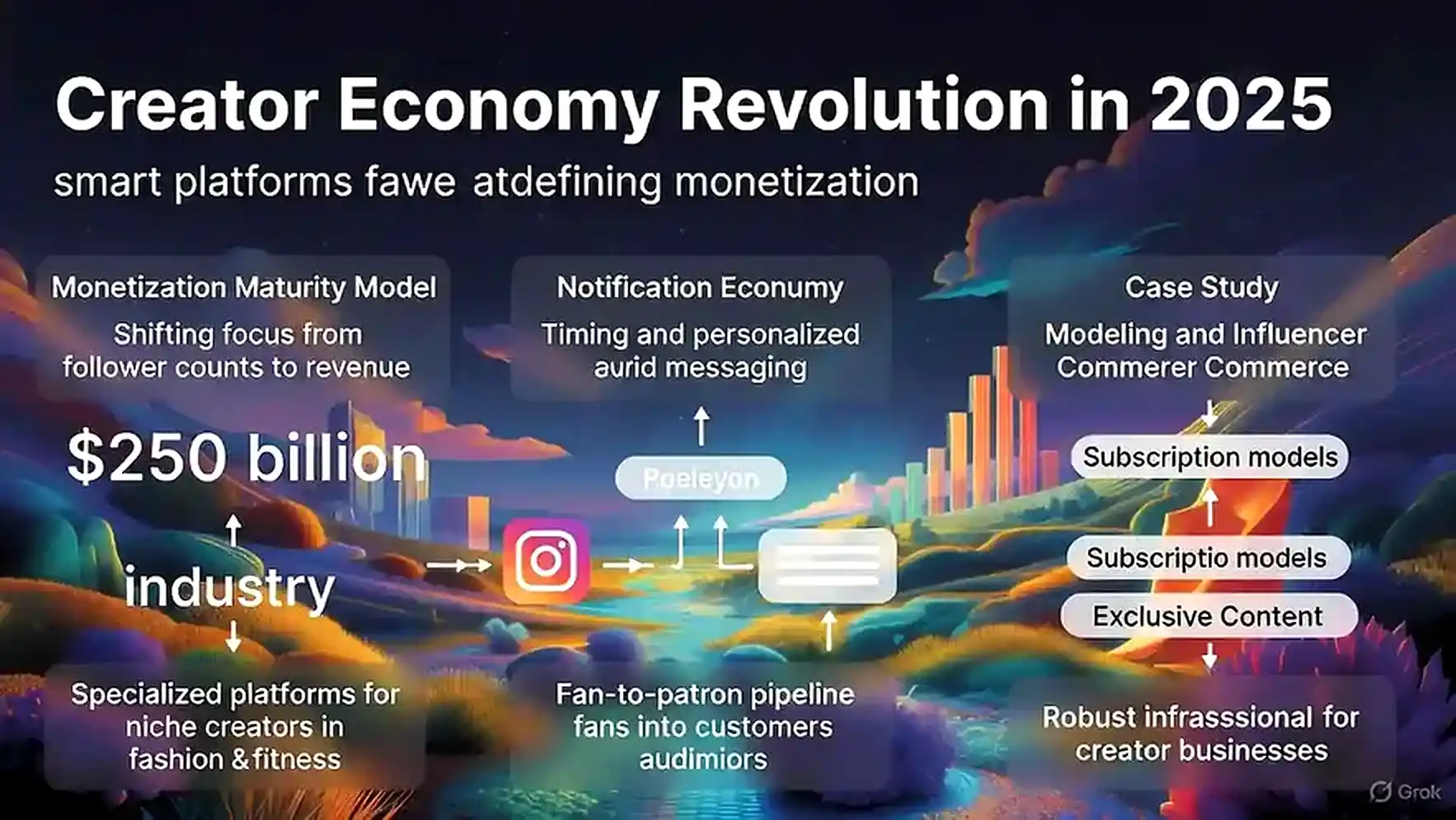
The creator economy has gone from a trend to a $250 billion industry, revolutionizing online business startups. However, despite fast growth, creators struggle to convert attention into reliable earnings. The platforms that break this code aren't just improving business.
Beyond Follower Counts: The Monetization Maturity Model
Old-fashioned social media taught us to worship numbers that show off our looks. People considered followers, likes, and shares to be signs of achievement. Yet, savvy creators have realized the challenging truth that engagement doesn't always lead to revenue. A persistent challenge for digital content creators is the revenue compared to the audience.The reason for this is that most platforms operate differently. They're designed to get people to spend more time on the platform so that advertisers can make more money, not to make it easier for creators and audiences to make money directly. What happened? People who make things and have hundreds of thousands of followers often make less money than regular workers, and platforms keep most of the value that their content creates.The next generation of creator platforms knows about this problem. These tools don't just add monetization on top of engagement-focused infrastructure; they make it a central part of their design. Not just for sharing content, but also for improving conversions.
The Notification Economy: Timing as Competitive Advantage
In a time when there is too much content, timing is often more important than quality. If you publish a great piece of content when your audience isn't looking, it will do worse than if you publish mediocre content at the right time. This has led to what we might call the "notification economy," where planned interactions with customers lead to measurable business results.Smart creators know that you need advanced tools to manage your audience well. Generic push notifications make noise and cause people to unsubscribe. Personalized, value-driven messages make people look forward to what will happen and get them to do something. The difference is in having infrastructure that sees communication with the audience as strategic instead of transactional.The Ntice App is an example of this change. It lets creators manage their relationships with their audiences in a way that was only possible for enterprise marketing teams before. When creators can divide their audiences into groups, plan strategic touchpoints, and track how many people buy something after seeing a specific message, they turn followers into customers instead of just passive viewers.
Platform Specialization: The End of One-Size-Fits-All
The creator economy is dividing into smaller, more focused segments. Before, YouTube, Instagram, and TikTok allowed all creations, but now there are niche platforms for creators. This specialization does not just focus on features.Advertising is how generic social networks make money, which creates conflicts of interest. They need users to stay on the platform and watch content, which often means blocking links or revenue streams that would take users to other sites. In contrast, specialized creator platforms make money when creators do, which is a perfect match for their goals.This is true in areas where content and commerce are a natural fit. Content creators focused on fashion, fitness, lifestyle, and entertainment need platforms that understand their revenue streams. Generic tools and stock photos don't measure up to creator-focused infrastructure.
The Fan-to-Patron Pipeline
The best businesses run by creators don't just get fans; they turn them into customers. This difference is very important. Fans passively consume content and might sometimes interact with it. People who support a creator's work do so because they get real value from the relationship.To build this pipeline, you need more than just good content. It requires strategic thinking about pricing psychology, value propositions, exclusivity mechanics, and managing relationships over time. Creators need to think like product managers. They need to know who their audience is and make products that turn casual fans into paying customers.Specialized platforms that know how these things work provide the infrastructure that makes this change easier. Instead of putting together payment processors, content delivery systems, and community management tools, creators can focus on what they do best—creating—while the platform infrastructure takes care of the business side of things.
Case Study: Modeling the Future of Creator Commerce
The modeling and influencer world provides insight into the future of creator commerce. This industry blends content creation and monetization, reflecting larger trends. Models and influencers were pioneers in using subscription content, exclusive access models, and fan relationship management. These strategies are now frequently used by creators.Fanvue Models and other platforms that serve this community show what happens when infrastructure is built to meet the needs of creators. These specialized platforms don't force creators to use generic templates. Instead, they give them tools that are built around real-world needs for workflow, compliance, and monetization models that work.The lessons learned in this area can be used in many other areas. Anyone who wants to build a personal brand can learn from how successful models run their businesses. They use tiered access models, exclusive content strategies, direct fan communication, and advanced funnel management. These aren't just strategies for one type of business; they're plans for long-term creator businesses in all types of industries.
The Infrastructure Imperative
Amateur creators can do well with simple tools. Professional creator businesses need professional infrastructure. It's not about cool features; it's about being reliable, following the rules, processing payments, analyzing data, and managing a large audience. The choices you make about infrastructure are often what sets apart a hobbyist content creator from someone who runs a creator business with six or seven figures in revenue.Many creators put off buying the right tools because they want to use hobby-grade tools in professional settings. This makes technical debt that costs more and more to fix. Payment processing problems, bad analytics, poor audience management, and few ways to make money aren't just annoying; they're also direct losses of revenue.The creator economy has grown up, and now it has infrastructure that can support real businesses without needing technical know-how. Creators don't have to become developers or hire engineering teams anymore. The right platforms take care of the hard work behind the scenes, giving creators interfaces that are as simple as social media and business tools that are as powerful as enterprise software.
Looking Forward: The Platform-Creator Partnership
ThPlatforms that see creators as partners instead of users will shape the future of the creator economy. This change in philosophy shows up in real life in the following ways: revenue sharing models instead of ads, tools that help creators make more money instead of metrics that measure how much time people spend on the platform, and features that are built around creator success instead of keeping people on the platform.People who want to build long-lasting businesses should look at platforms in this way. Do you make money when the platform makes money? Do features help you reach your business goals or the platform's goals for engagement? Can you control your relationship with your audience, or does the platform do that?These questions are important because the choices creators make about platforms can make or break their businesses. The right infrastructure makes work easier, scales well, and gets more useful over time. The wrong infrastructure causes constant problems, makes it hard to make money, and in the end, slows growth.The creator economy has grown from a fun hobby to a real business field. The infrastructure has grown up in the same way. In a world that is becoming more competitive, creators who understand this change and choose platforms that fit with their business goals are setting themselves up for long-term success.The revolution isn't coming; it's already here. The question is whether creators will change how they use their platforms or keep using tools that were made for a different time. The next chapter of digital entrepreneurship will be written by those who use specialized, creator-focused infrastructure.